
He has held this position since July 1988. Among Mr. Krens' initial major accomplishments since joining the Guggenheim was the first phase of the restoration
Cultural Diversity Roster
Find a Presenter
speaker
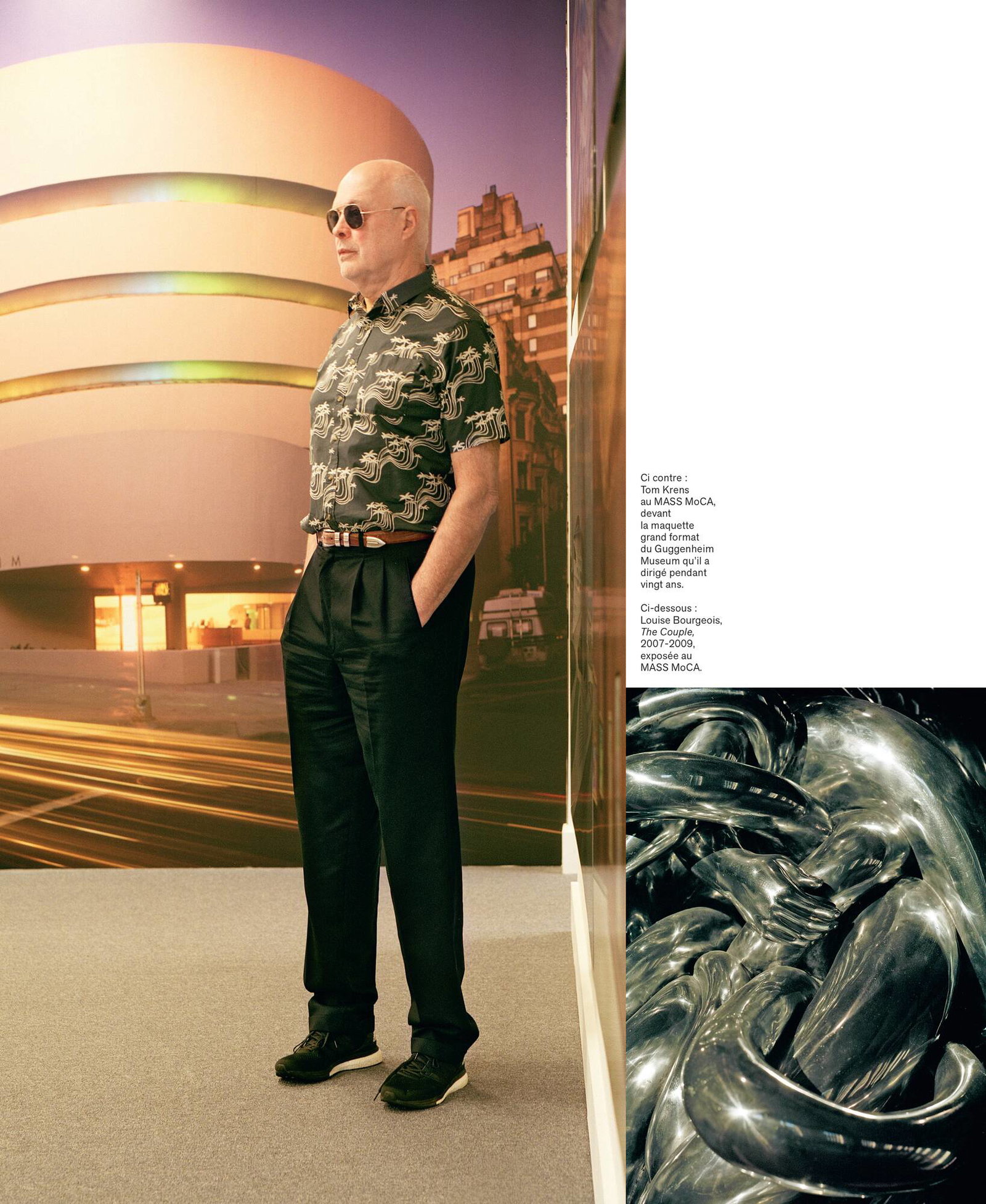
Thomas Krens
Thomas Krens is Director of the Solomon R. Guggenheim Foundation, which oversees and operates the Solomon R. Guggenheim Museum in New York
Categories :
[Sassy_Social_Share]
Bio
Full Bio
He has held this position since July 1988.
Among Mr. Krens‘ initial major accomplishments since joining the Guggenheim was the first phase of the restoration and expansion of the Solomon R. Guggenheim Museum, which was completed in 1992. The principal components of the $80 million project were the restoration of the interior of the landmark Frank Lloyd Wright building, the construction of a ten story tower gallery and office building designed by Gwathmy Siegel Associates, and the addition of a new storage and technical services facility on New York City’s West Side. In 2004, the Guggenheim successfully completed a campaign to raise $25 million for the second phase of the capital project, to restore the exterior facade of the Wright building, upgrade the entire security and climate control systems, and provide public access to the roof terrace of the main building as Wright had originally intended.
Under Mr. Krens’ leadership over the past 15 years, the Guggenheim Foundation has built an unprecedented international network of cultural facilities and alliances with major museums. Beginning in 1990, the Guggenheim Foundation has developed a series of buildings contiguous to the Palazzo Venier dei Leoni, home of the Peggy Guggenheim Collection, more than doubling the size of the Venice Museum. In 1991, Mr. Krens negotiated the unique partnership between the Basque Regional Government and the Guggenheim Foundation that produced the Guggenheim Museum Bilbao, designed by Frank O. Gehry. The Guggenheim Bilbao opened to wide public acclaim in October 1997 and is now recognized by many critics and architectural historians as one of the greatest buildings of the 20th century.
In November 1997, the Deutsche Guggenheim Berlin — a museum space and exhibition facility designed by American architect Richard Gluckman and located in the former East Berlin — was opened as the result of a joint venture between the Guggenheim Foundation and Deutsche Bank A.G. It has since presented more than 30 highly acclaimed exhibitions and single artist commissions to the Berlin public. In October 2001, the Guggenheim opened another small, but architecturally important museum, the Guggenheim-Hermitage Museum Las Vegas, designed by Rem Koolhaas.
As a result of the extraordinary success of the Guggenheim Bilbao and the general international expansion concept, the Guggenheim Foundation has been approached by more than 120 cities to develop proposals and feasibility studies for new museums. At present, the current Guggenheim projects include: Taiwan, a partnership with the City of Taichung and the Central Government to build a 290,000 s.f. museum designed by 2004 Pritzker Prize winner Zaha Hadid; Hong Kong, a partnership with Cheung Kong Holdings and Sun Hung Kai to develop a 590,000 s.f. museum designed by Norman Foster; Guadalajara, Mexico, a collaboration with the City of Guadalajara, the State of Jalisco, and the Central Government for a major new museum; Rio de Janeiro for a 280,000 s.f. Guggenheim Museum designed by Jean Nouvel; and St Peterburg, Russia with the Hermitage Museum, for conversion of the 600,000 s.f. General Staff Building of former Czarist War Admiralty as an expansion of the Hermitage.
Under Mr. Krens direction, the Guggenheim Foundation has been a leader in establishing international collaborations among major museums. In June of 2000, the Guggenheim entered into a partnership with the State Hermitage Museum (SHM) in St. Peterburg, Russia, and seven months later with the Kunsthistorisches Museum (KHM) in Vienna, Austria. The purpose of the Guggenheim-SHM-KHM alliance is to share collections, jointly develop exhibitions and educational programs that will benefit a wide international audience, and cooperate on the construction of new museums, primarily in Asia and Latin America. The combined collections of the Guggenheim, Hermitage, and Kunsthistorisches Museums are the largest collection of cultural artifacts in the world organized under one cooperative programming entity.
Born in New York City in December 1946, Mr. Krens graduated from Williams College with a B.A. and Honors in Political Economy in 1969. He holds a Masters Degree in Art from the State University of New York, and an MBA from Yale University. From 1971 to 1988, he was an Assistant Professor in the Art Department at Williams College; in 1981 he also became Director of the Williams College Museum of Art. Although Mr. Krens assumed his responsibilities as director of the Guggenheim in 1988, he continued to teach at Williams at both the graduate and undergraduate levels as Adjunct Professor of Art History until 1991. In 1991 and 1992, he was a lecturer at the Yale School of Management, where he taught courses on the Management of Cultural Institutions. From his position at Williams in the late 1980s and early 1990s, Mr. Krens was the originator and founding chairman of MASS MoCA (the Massachusetts Museum of Contemporary Art), one of the largest museums of contemporary art in the world, which opened its doors in 1999.
As Chief Artistic Officer of the Guggenheim Foundation, Mr. Krens is responsible for exhibitions and programming for all Guggenheim museums world-wide. Since 1992, the Guggenheim has become one of the leading exhibition-making institutions in the world, producing more than 150 major exhibitions. These projects have ranged from numerous, definitive retrospectives of major American and international artists-such as Dan Flavin, Roy Lichtenstein, Robert Rauschenberg, Claes Oldenburg, Ellsworth Kelly, Jenny Holzer, Francesco Clemente, Mario Merz, Georg Baselitz, Nam Jun Paik, Robert Morris, and Matthew Barney to historical surveys of 20th art, such as The Great Utopia: The Russian and Soviet Avant-Garde 1915-1932 (1992); Abstraction in the 20th Century (1996); The Italian Metamorphosis (1994); Picasso and the Age of Iron (1993); and Kasimir Malevich (2003).
While the Guggenheim collections are focused on the 20th century, beginning in 1996, and in keeping with the move toward internationalism, Mr. Krens initiated a highly successful program of major exhibitions that explore the historical and indigenous cultures of various parts of the world. These include Africa: The Art of a Continent (1996); China: 5000 Years (1998); Brazil: Body and Soul (2001); and most recently, The Aztec Empire (2004). The Guggenheim also has expanded its programming reach into the fields of architecture and design with such landmark exhibitions as The Art of the Motorcycle (1998); The Architecture of Frank Gehry (2001); and Giorgio Armani: A Retrospective (2002). Guggenheim exhibitions traveling to other museums outside the Guggenheim network are seen by an additional million visitors per year.
Mr. Krens is a member of the Association of Art Museum Directors; the Reunion de Musees; the Council on Foreign Relations, New York; and the Societé Kandinsky of Centre Georges Pompidou, Paris. He has received Honorary Doctorates from Williams College, Yale University, and the State University of New York at Albany, and in 2000 was awarded the Special Prize for Architectural Patronage at the Venice Architecure Biennale. Mr. Krens is also President of the Guggenheim Motorcycle Club.
Check Availability
Topics
Topics
An Evening With Thomas Krens
Videos
Videos
Thomas Krens lecture "The arts and culture in the 21st century", 2000-09-18
The Power of Political Art - Mr. Thomas Krens | Herzliya Conference 2016


