
Artist and Designer Maya Lin interprets the natural world through the lens of history, politics, and culture. Her unique installations, architecture, and memorials, such as the Vietnam Veterans Memorial, become a part of the land and merge physical and psychological environments to create a new way of seeing the world around us.
Cultural Diversity Roster
Find a Presenter
speaker

Maya Lin
Artist, Designer, Environmentalist
[Sassy_Social_Share]
Bio
Full Bio
Artist and Designer Maya Lin interprets the natural world through the lens of history, politics, and culture. Her unique installations, architecture, and memorials, such as the Vietnam Veterans Memorial, become a part of the land and merge physical and psychological environments to create a new way of seeing the world around us.
In her visually rich presentations, Lin includes a retrospective of her art and architectural works as well as her groundbreaking memorials as she discusses her creative process, the future of the planet, and our relationship with our environment.
In 2009 she was awarded the National Medal of Arts — the nation’s highest honor for artistic excellence. Lin was again awarded in 2016 with the Presidential Medal of Freedom – the nation’s highest civilian honor, presented to those who have made “an especially meritorious contribution to the United States,” for her widely acclaimed memorials.
Lin’s memorials address the critical social and historical issues of our time. From the Vietnam Memorial, which she designed as an undergraduate student at Yale, to The Civil Rights Memorial in Alabama and the Women’s Table at Yale, she makes our history part of the landscape.
Lin’s art explores how we experience and relate to landscape, setting up a systematic ordering of the land that is tied to history, memory, time, and language. Her interest in landscape has led to works influenced by topographies and geographic phenomena.
Lin’s work asks the viewer to reconsider nature and the environment at a time when it is crucial to do so. A committed environmentalist, she is working on her last memorial, “What is Missing?” a cross-platform, global memorial to the planet, located in select scientific institutions, online as a website, and in a book, calling attention to the crisis surrounding biodiversity and habitat loss.
Her architectural projects are largely undertaken at the request of non-profit institutions and include the Museum for Chinese in America (2009) in New York City, the Riggio-Lynch Interfaith Chapel (2004), and Langston Hughes Library (1999) in Tennessee. Current projects include the redesign of the Neilson Library at Smith College. Her designs create a close dialogue between the landscape and the built environment, and she is committed to advocating sustainable design solutions in all her works.
Lin has been the subject of numerous solo exhibitions at museums and galleries worldwide, with works in the permanent collections of the National Gallery of Art, The Metropolitan Museum of Art, The Museum of Modern Art, and The Smithsonian Institution.
Maya Lin serves on the boards of the Bloomberg Foundation, Museum of Chinese in America, and the What is Missing? Foundation. She is an honorary board member of the Natural Resources Defense Council and is the recipient of the Presidential Design Award and honorary doctorates from Yale and Harvard.
A member of the American Academy of Arts and Letters and the American Academy of Arts and Sciences, she has been profiled in TIME, The New York Times Magazine and The New Yorker. The 1996 documentary about her, Maya Lin: A Strong Clear Vision, won the Academy Award for Best Documentary. Her book about her work and creative process, Boundaries, is in its fifth printing with Simon & Schuster. Maya Lin: Topologies, a monograph spanning the past 30 years of her career, was first released in fall 2015 by Skira Rizzoli and is in its second printing.
Check Availability
"*" indicates required fields
Topics
Topics
AN EVENING WITH MAYA LIN: AT THE INTERSECTION OF ART AND ARCHITECTURE
TOPOLOGIES: PROCESS & PROJECTS
AN EVENING WITH MAYA LIN, ENVIRONMENTAL ARTIST
Videos
Videos
Maya Lin On Being A Female Architect: 'I Didn’t Want My Gender To Become An Issue' | TIME
Maya Lin Designs the Vietnam Veterans Memorial - Drunk History
Books

MAYA LIN
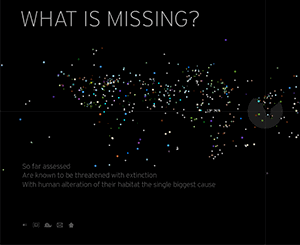
WHAT IS MISSING


