
Mauricio Macri was President of Argentina from 2015 to 2019...
Cultural Diversity Roster
Find a Presenter
speaker
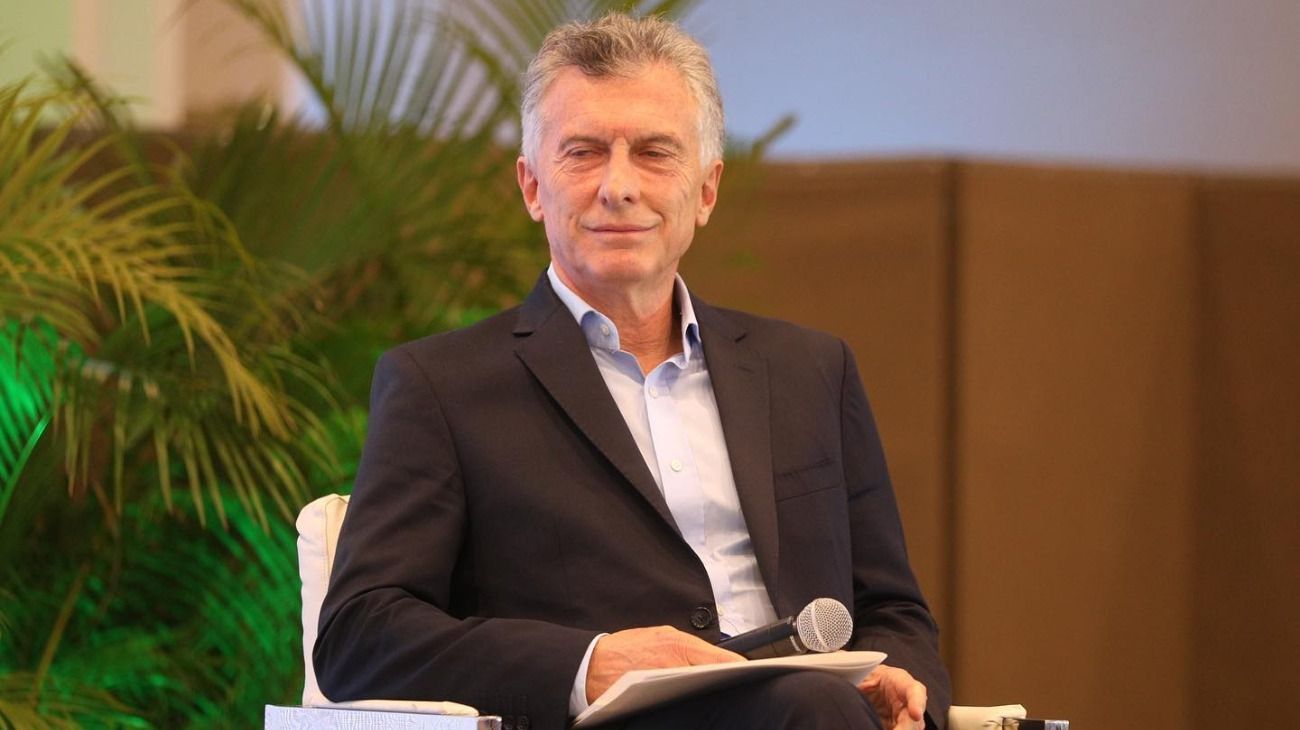
Mauricio Macri
President of Argentina (2015 - 2019), Three-Time President of Boca Juniors Football Club, Renowned Business & Political Leader
Categories :
[Sassy_Social_Share]
Bio
Full Bio
Mauricio Macri was President of Argentina from 2015 to 2019. He was twice elected as Mayor of the City of Buenos Aires, National Congressman, three-time President of Boca Juniors Football Club and featured twice as one of the 100 most influential people in the world by TIME magazine in 2016 and 2018.
At the age of 32, Mauricio Macri was kidnapped and kept in a basement for 14 days. After the payment of his ransom, he witnessed a discussion between his captors to decide whether to kill or release him. It is after this proximity to death that Macri decided to turn his life around.
At that time, he was the CEO of Macri Group, and decided to cut his family’s mandates and run to direct the Boca Juniors Football Club, of which he was a passionate fan. He was elected President 4 years later and after overcoming all kinds of prejudices and pressures, including from Boca´s barra brava (hooligan group), he led the team to win 17 championships in 12 years – among them 2 Club World Cups, winning the finals against no less than Real Madrid and Milan – placing it among the 5 top clubs in the world.
His determination and vocation to change reality brought him closer to politics. In 2005, he founded a party that led him to be twice elected Mayor of the City of Buenos Aires and finally President, only 10 years after founding the party, ending with 70 years of bipartisanship in Argentina.
During his two terms as Mayor of Buenos Aires, he modernized the State, promoted sustainability and revolutionized the city’s mobility, with measures such as the creation of the Metrobus, the extension of the Subway network, the creation of the EcoBici system, the construction of underpasses, the pedestrianization of the micro-down town and the recovery of public spaces. During his term, the Metropolitan Police was also created, the Early Childhood Centers were launched, and the Economic Districts were created and promoted. The Audiovisual, Technological, Arts, Design and Sports District was also created to generate labor poles that increase economic activity in different neighborhoods of the City.
After winning the 2015 presidential election, Mauricio Macri took office with a country on the verge of economic collapse: negative monetary reserves, a consolidated public expenditure of 48% of the GDP -the highest in Latin America-, record tax pressure, a fiscal deficit of 8% of the GDP and over 10 years in default in the international debt market, to mention just a few indicators. Despite being the first President in the history of Argentina to be in the minority in both chambers of the Congress, he managed to make progress in his great objective: the country’s institutional transformation. His administration implemented several measures to strengthen democracy, guarantee the powers’ independence and made management transparency an indispensable value which permeated the entire public administration, such as the law on access to public information, digitized tenders, traceability and sworn statements by civil servants, among other initiatives.
In other areas of his administration, the most ambitious infrastructure and energy plan in Argentina’s history was carried out, connecting the entire territory physically (freight trains, planes, airports, routes and highways) and virtually (4G connectivity and optical fiber); revolutionizing the energy matrix to make it sustainable.
Macri’s administration prioritized Argentina’s integration into the world and its opening to international markets. Within this framework, in 2016 President Macri received the official visit of President Barack Obama who congratulated him for reconnecting Argentina with the world. Two years later, when Mauricio Macri received the G20 members in Buenos Aires as the group’s first South American Chairman, he was praised by Donald Trump, Angela Merkel, Emmanuel Macron and other leaders for achieving one of the most consensual meetings in their history. In June 2019, he played a key role in concluding the negotiations to enter into the Mercosur-European Union Strategic Association Agreement. Thus, a process that extended for over 20 years concluded, which constituted an unprecedented event for both blocks in world history.
Regarding the economy, it was possible to simultaneously lower public spending, the fiscal deficit and taxes, all of which were at record levels. He managed to leave the Central Bank with robust reserves, trade surplus, external balance, competitive exchange rate and recovered energy; all important foundations for the growth of a solid economy.
The electoral victory of the unified opposition in 2019 destabilized markets and unbalanced the Argentinian economy; however, Mauricio Macri left power with 41% of the votes (2.2 million more than when he took office in 2015) after 2 months of popular marches by millions of people in favor of republican values; in contrast to the protests in the rest of the region with high levels of violence.
Mauricio Macri has received the Collar of the Order of Isabella the Catholic granted by King Philip VI of Spain; the Grand Cross of the Legion of Honor granted by France; Knight with Grand Cross with Collar of the Order of Merit of the Italian Republic; and the Grand Cross of the Mexican Order of the Aztec Eagle, among other international distinctions. In June 2019, he was awarded the FIFA Living Football Award, which is granted to outstanding personalities from around the world for their efforts to develop football, and in January 2020, he was appointed Executive President of the FIFA Foundation.
In his lectures, President Macri shares an updated vision of Latin America and its geopolitical challenges, as well as topics such as the keys to positive leadership, high-performance team-building, decision-making, cultural change, balancing power with emotional life, resilience and courage, managing the short term while building the foundations for the future, consensus training, listening and dialogue as a distinctive work method.
Check Availability
"*" indicates required fields
Topics
Topics
Leading in the Age of Immediacy: How to Manage Change in an Interconnected World
Leading in the Age of Immediacy: Managing Change in an Interconnected World
Videos
Videos
Mauricio Macri en DESDE EL LLANO (Programa completo 14/11/2022)
Mauricio Macri dio una frase polémica y tuvo que pedir disculpas: "Alemania es una raza superior"


