
David Galenson is professor of economics at the University of Chicago and Academic Director of the Center...
Cultural Diversity Roster
Find a Presenter
speaker
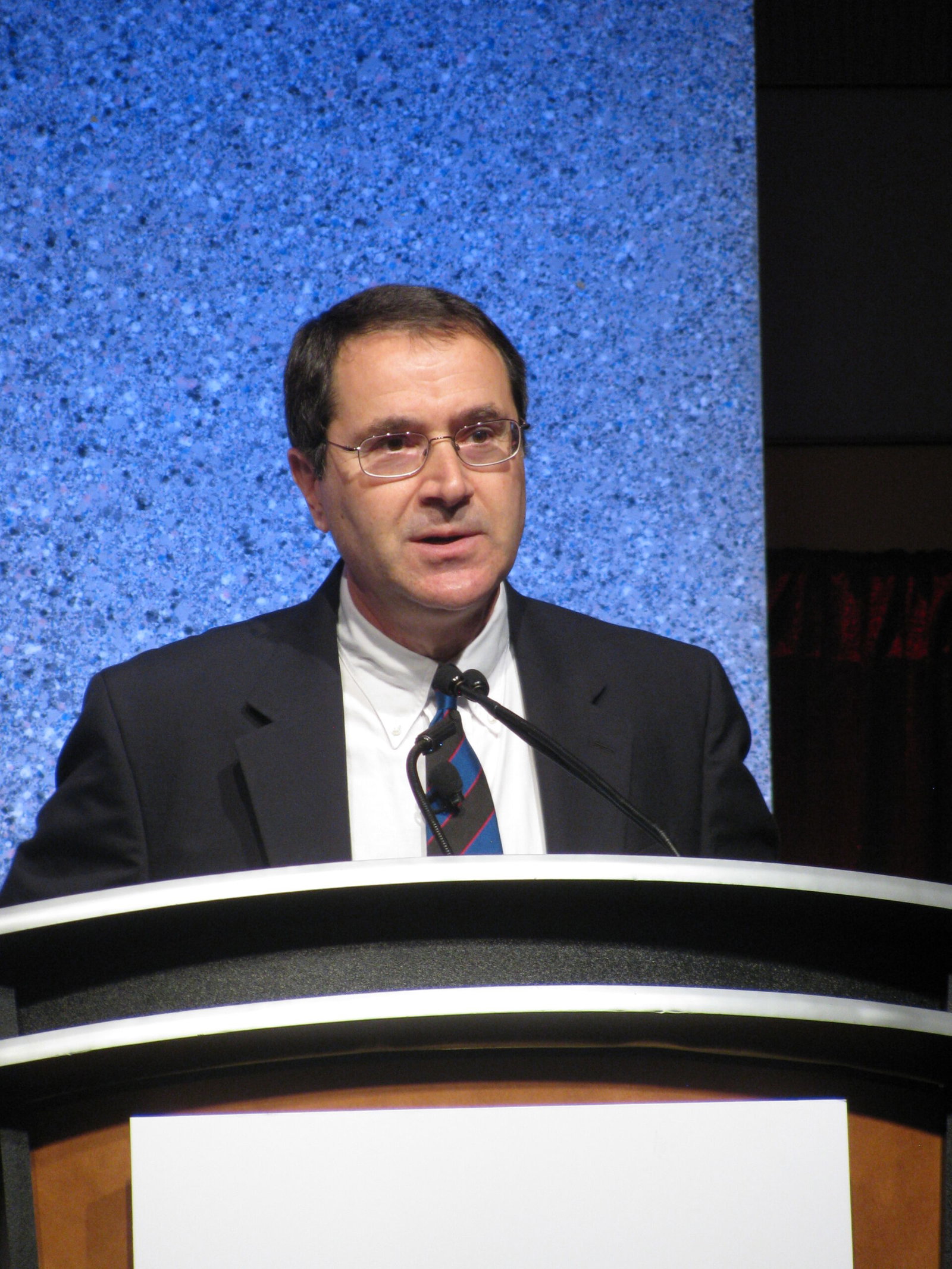
David Galenson
Father of Conceptual vs Experimental Theory of Creativity
[Sassy_Social_Share]
Bio
Full Bio
David Galenson is professor of economics at the University of Chicago and Academic Director of the Center for Creativity Economics at the Universidad del CEMA, Buenos Aires. He received his BA, MA, and PhD in economics from Harvard University. He has been a visiting professor at the California Institute of Technology, MIT, University of Texas at Austin, L’Ecole des Hautes Etudes en Sciences Sociales in Paris and American University of Paris.
Galenson began his career as an economic historian. His research focused on the history of American labor markets, and included a series of studies on the productivity and economic life cycles of indentured servants and slaves in the colonial period and European immigrants in the nineteenth century.
In 1997, while buying a painting by a contemporary artist, Galenson became intrigued by the life cycles of artists: when in their careers do painters produce their greatest work? Using quantitative evidence taken from auction records, art history textbooks, and retrospective exhibitions, he discovered that there are two distinctly different patterns: some painters do their most expensive – and most highly esteemed – work early in their careers, while others do theirs late in their lives. Qualitative evidence provided the reasons for these contrasting patterns, which stem from systematic differences in the life cycles of creativity. Conceptual artists, like Picasso, aim to express their ideas or emotions. With clear goals, they plan their work, and execute it decisively. Their most important innovations appear early in their careers, before they develop fixed habits of thought, and begin to repeat themselves. In contrast, experimental artists, like Cézanne, seek to develop methods that can allow them to record their visual observations. They are uncertain how to do this, so they work incrementally, by trial and error. Their innovations generally appear late in their careers, after long periods of study.
After developing this analysis by studying only painters, Galenson carried out research that revealed that the same theory extended to other arts and, in fact, to nearly all intellectual activities. Thus the conceptual novelist Scott Fritzgerald published The Great Gatsby at 29, while the experimental Mark Twain published Huckleberry Finn at 50; the conceptual Orson Welles directed Citizen Kane at 25, while the experimental Alfred Hitchcock directed Vertigo at 59; and the conceptual T.S. Eliot wrote “The Love Song of J. Alfred Prufrock” at 23, while the experimental Robert Frost wrote “Stopping by Woods on a Snowy Evening” at 48.
Because this research has contradicted a great deal of earlier work by psychologists and art scholars, many academics have been hostile to it. In 2006, however, Daniel Pink wrote in Wired that Galenson’s research constitutes “a unified field theory of creativity,” and David Leonhardt wrote in the New York Times: “If you look through the prices from the current auction season, or walk through any major museum, you can’t help but notice that Mr. Galenson is onto something.” Malcolm Gladwell wrote about this theory in a New Yorker article titled “Late Bloomers” in 2008, and now regularly lectures about “Picasso vs. Cézanne.” Gladwell wrote: “Galenson’s idea that creativity can be divided into these types – conceptual and experimental – has a number of important implications.” One of these is that the widespread belief that creativity is the exclusive province of the young is false. Another implication provides insight into the hyperkinetic nature of contemporary society, which privileges conceptual innovation in many domains. Galenson’s research may not only allow us to gain a better understanding of our own intellectual development, but may ultimately help us to become more creative.
Check Availability
Topics
Topics
Old Masters and Young Geniuses: The Two Life Cycles of Artistic Creativity
Conceptual Revolutions in Twentieth-Century Art
Videos
Videos
David Galenson at the Skoll World Forum 2007
105. Are You an Old Master, or a Young Genius? David W. Galenson.


